IPL supports spacecraft development from early prototyping through environmental testing. This page brings the lab’s work areas, equipment, photos, and test specifications together in one place. Contact IPL staff before planning a test so that configuration, training, and availability can be confirmed.
On this page
- Electronics Lab
- Hardware Lab
- Cleanroom
- Thermal Chamber
- Thermal Vacuum Chamber
- Vibration Testing System
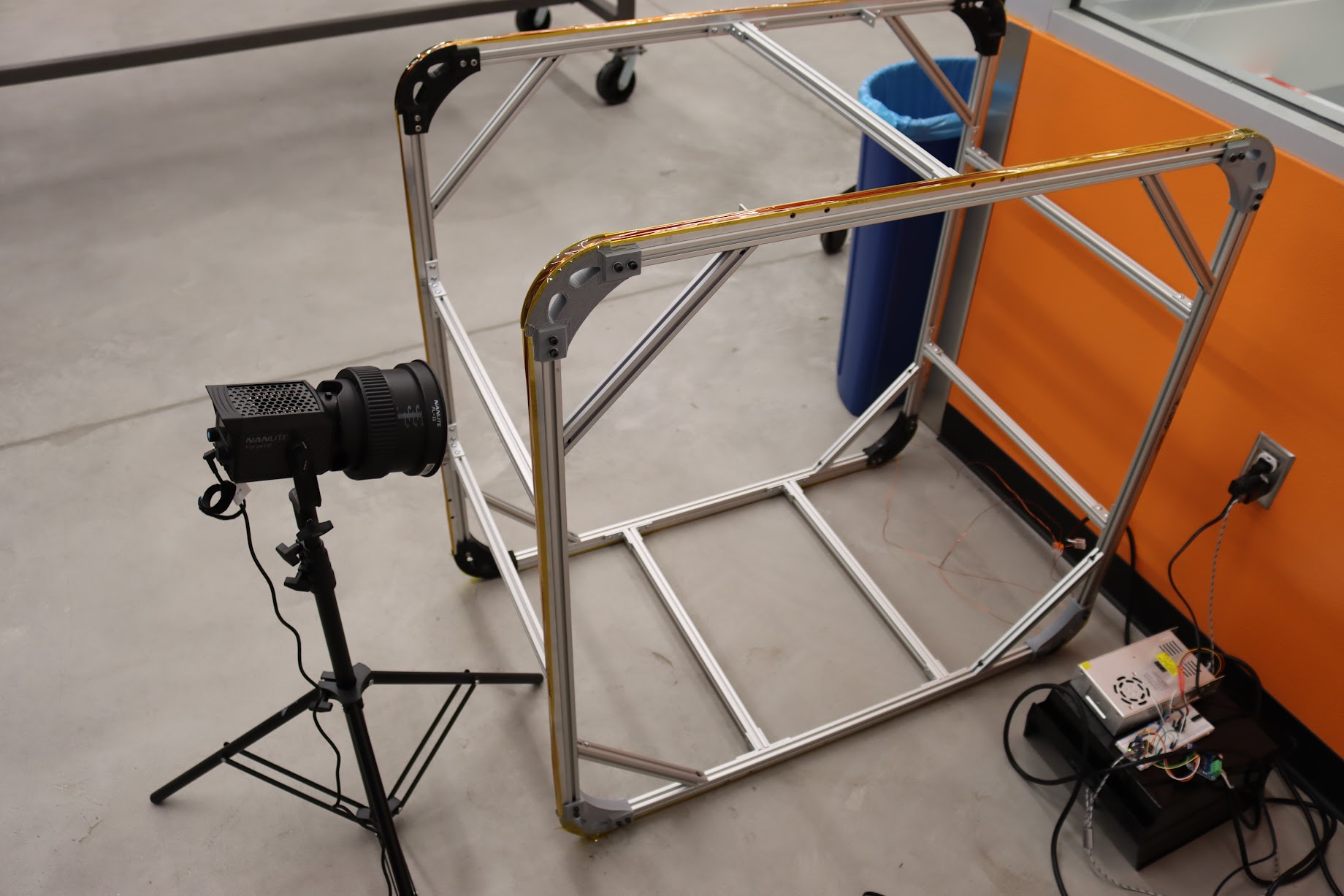
- ADCS Testbed
Electronics Lab
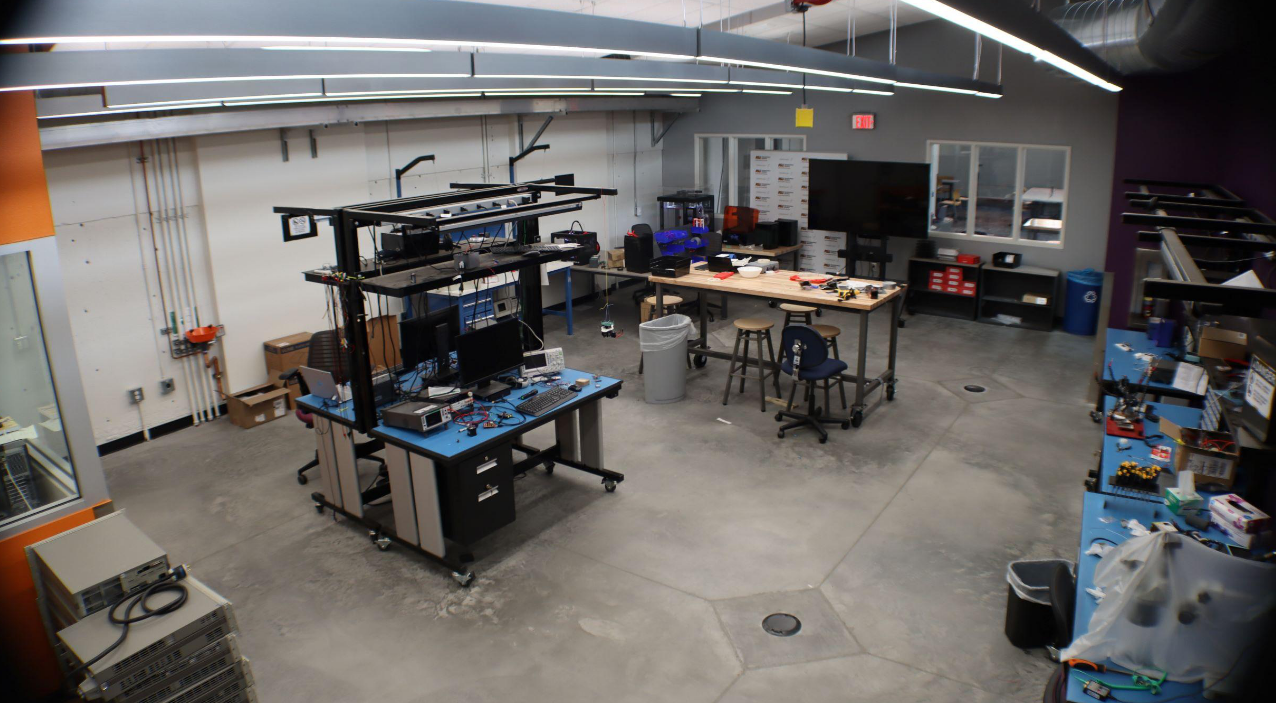
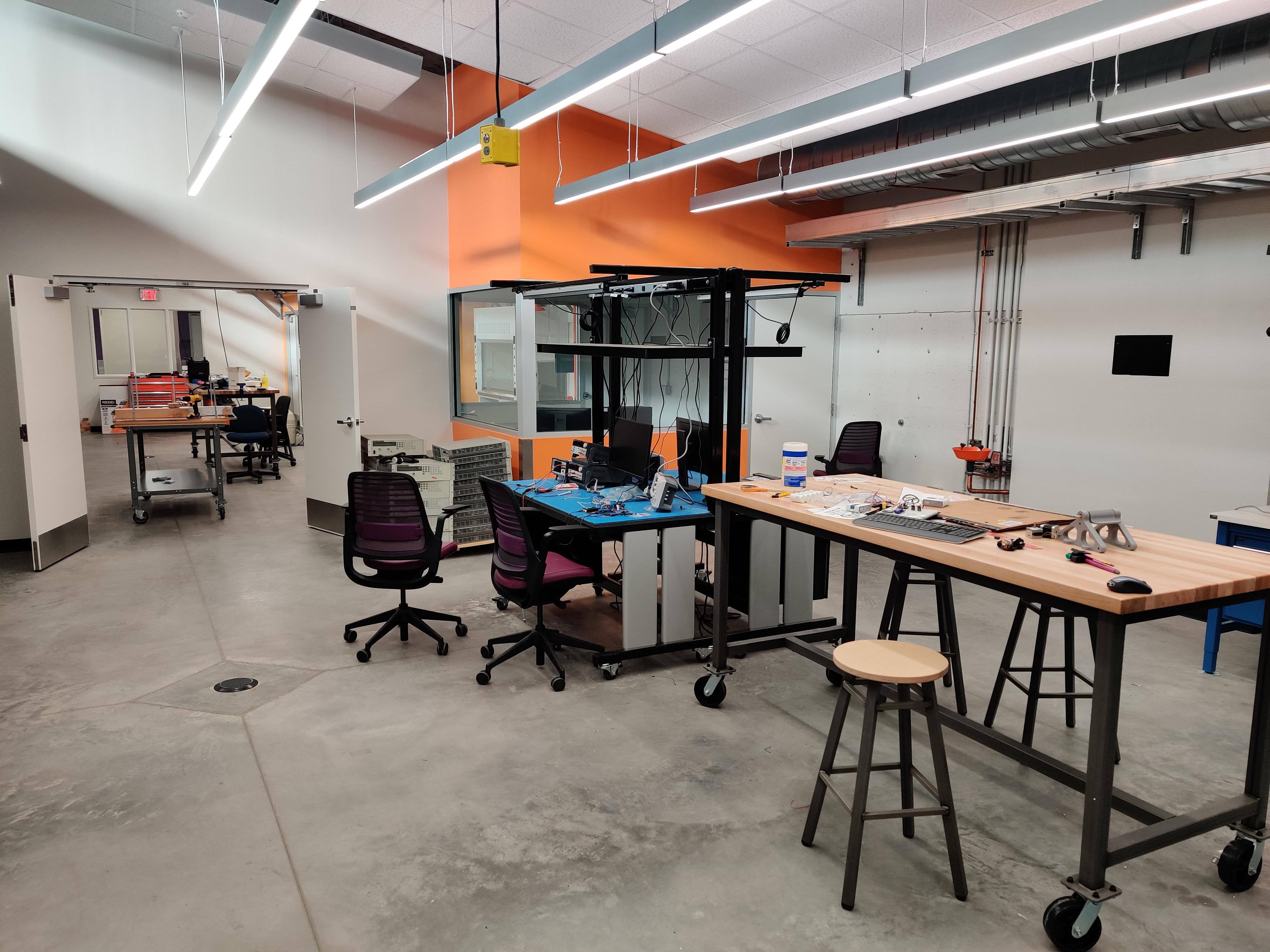
The electronics lab supports electronics prototyping, limited manufacture, board assembly, and test.
Work areas and equipment
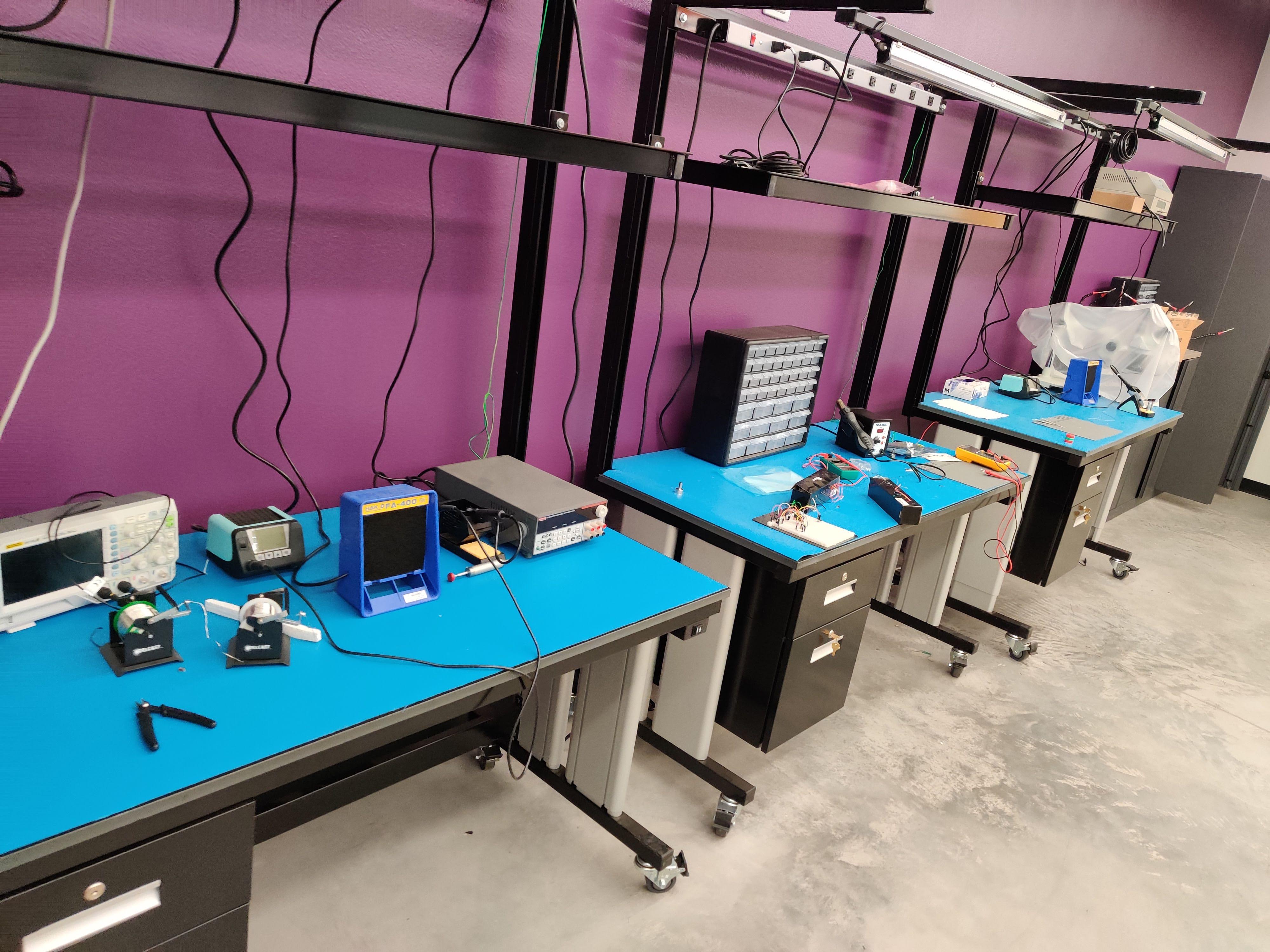
- Six electronics workstations with overhead lighting, ESD-safe mats, and grounding wrist straps
- Two test workstations with:
- Rigol DS1104Z oscilloscopes
- Keithley 2231A-30-3 benchtop DC power supplies
- Keithley DAQ6510 data acquisition/multimeter systems
- Three assembly stations with soldering irons, hot plates, rework stations, fume extractors, PCB microscopes, hand tools, calipers, and common electronics hardware
- Puhui T-962 infrared PCB reflow oven
- RF test station with two Advantest R3131 spectrum analyzers and an Agilent E4350B solar-array simulator (8 A, 480 W)
- Compressed-gas storage for four cylinders, 4–12 inches in diameter
3D printing
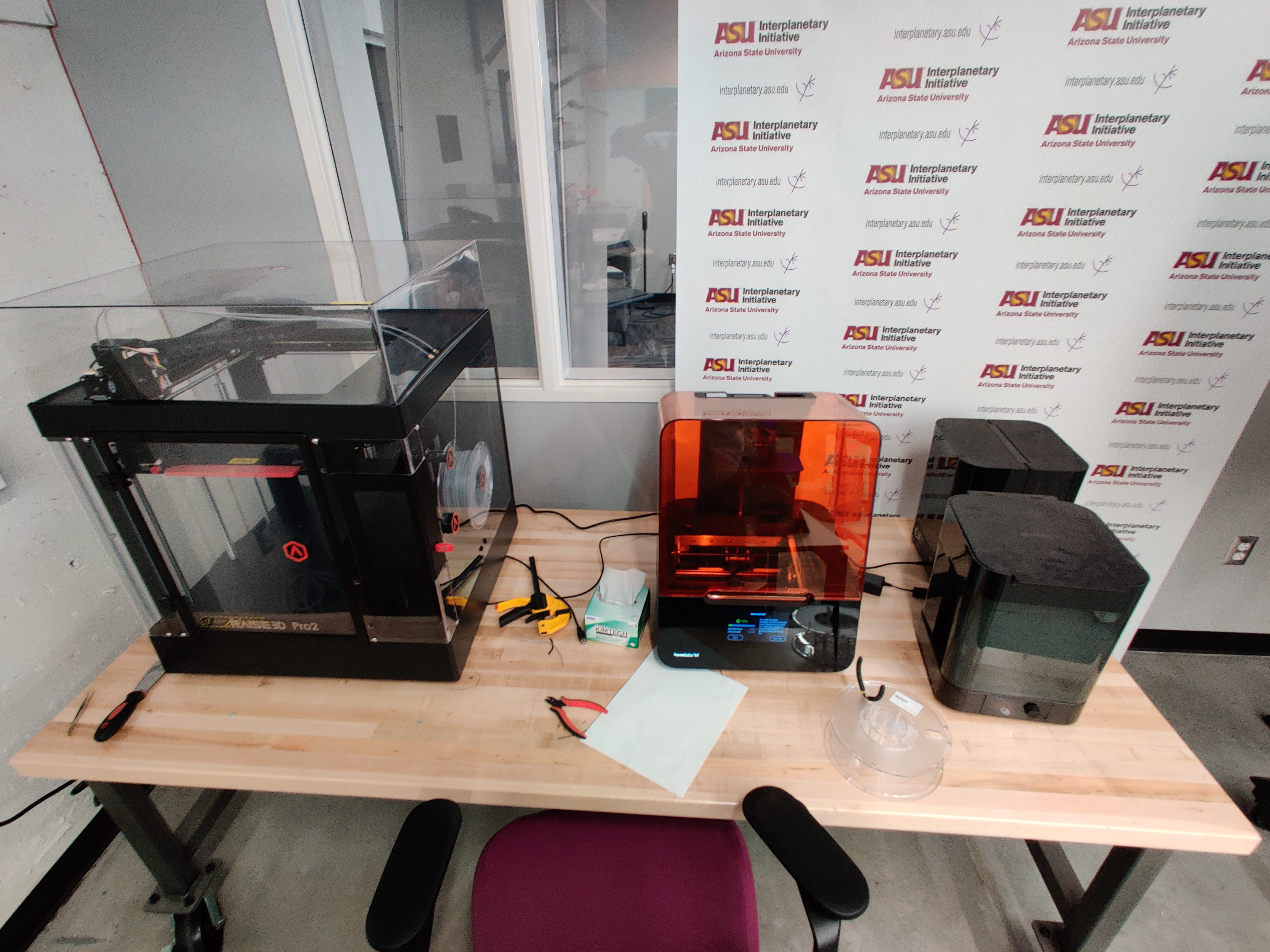
- Raise3D Pro2: 300 × 300 × 300 mm heated print bed; supports several materials
- MakerBot Replicator 2X: heated bed; supports several plastics
- Formlabs Form 3 SLA printer: 145 × 145 × 185 mm build volume
- Formlabs wash and curing stations
Hardware Lab
The fabrication and test side of IPL provides common hand and power tools alongside the larger thermal, vacuum, and vibration systems described below.

Equipment
- Wen and Ryobi drill presses
- Workbenches and tool chest
- Fume hood and air compressor
- Drills and drill bits, circular saw, hammers, clamps, hacksaw, wrenches, taps, Heli-Coils, heat gun, Dremel, glue gun, and common shop supplies
- Liquid-nitrogen dewar with cryogenic apron, gloves, and face shield
- Thermotron S1.2 thermal chamber
- Approximately 1 m³ vacuum chamber
- CubeSat vibration system


Cleanroom
The 100-square-foot cleanroom is dedicated to small clean assemblies. It fits an eight-foot assembly bench where two or three people can work comfortably. Lab protocols govern access, cleaning, and protective garments.
Capabilities
- ESD-safe assembly table
- Met One 237A particle counter
- Temperature and humidity logging
- HVAC isolation from other rooms
- Clean protocol suitable for light-duty CubeSat assembly


Thermal Chamber
IPL has two thermal chambers. The primary workhorse is a Thermotron S1.2 Mini-Max, used for controlled hot and cold testing.
Demonstrated configuration
- Temperature range: −70 °C to +180 °C
- Internal volume: 1.2 ft³, suitable for 1U–3U CubeSats
- GN2 purge
- Thermocouple, power, and custom wire feedthroughs

Scale and instrumentation


Thermal Vacuum Chamber
The thermal-vacuum system is built around an approximately 1 m³ chamber with electrical feedthroughs and provisions for thermal hardware. The achieved values below are separated from upgrade goals so test planning does not assume unfinished capabilities.
Demonstrated capabilities
- Approximately 1 m³ internal volume
- Lowest recorded pressure: 1.22 × 10⁻³ Torr (November 21, 2021)
- Nine total ports
- Electrical feedthroughs:
- Four 50-pin D-sub connectors, rated to 500 V and 5 A
- One 25-pin D-sub connector, rated to 500 V and 5 A
- Four BNC coaxial connections
- One USB 3.0 connection
- Phase 1A hardware: platen, insulation, heaters, initial shroud, electrical feedthroughs, and computer setup


Planned upgrades and targets
These are design goals, not currently advertised test capabilities:
- Pressure range from 760 Torr to 1.00 × 10⁻⁵ Torr
- Thermal control from −110 °C to +80 °C
- Phase 1B: GN2 plate, residual-gas analyzer, LN2 feedthroughs, LN2 platen cooling, and LN2 nipple adapters
- Phase 2: full thermal shroud


Vibration Testing System
The Labworks CubeSat vibration system has an upgraded shaker and supports launch-environment testing for 1U–6U CubeSats.
Demonstrated configuration
- Maximum random force: 350 lbf RMS
- Maximum sine force: 500 lbf peak
- Maximum shock force: 1,000 lbf peak
- Frequency range: 2–3,000 Hz
- Continuous peak-to-peak displacement: 1 inch
- Peak-to-peak displacement between stops: 1.2 inches
- 1U–6U CubeSat hard-mount fixture
- Configurable for launch-provider vibration specifications

Components and fixtures
The dLW127.153-500 electrodynamic shaker system includes an ET-127 shaker, dPA-153-7 power amplifier, and VL-144x digital sine, random, and shock controller.


ADCS Testbed
The attitude determination and control system (ADCS) testbed supports calibration and testing of spacecraft sensors and actuators.
Demonstrated configuration
- One-dimensional uniform magnetic-field generation
- Uniform region: ±0.25 m from center
- Magnetic-field range: ±3 gauss
- Open-loop control

Last generated: November 17, 2026